
Are plastic moving crates better for the environment?
Plastic sounds worse than cardboard until you count the uses. One crate does hundreds of moves. A carton does one, maybe two.
· 4 min read · Wombat Crates
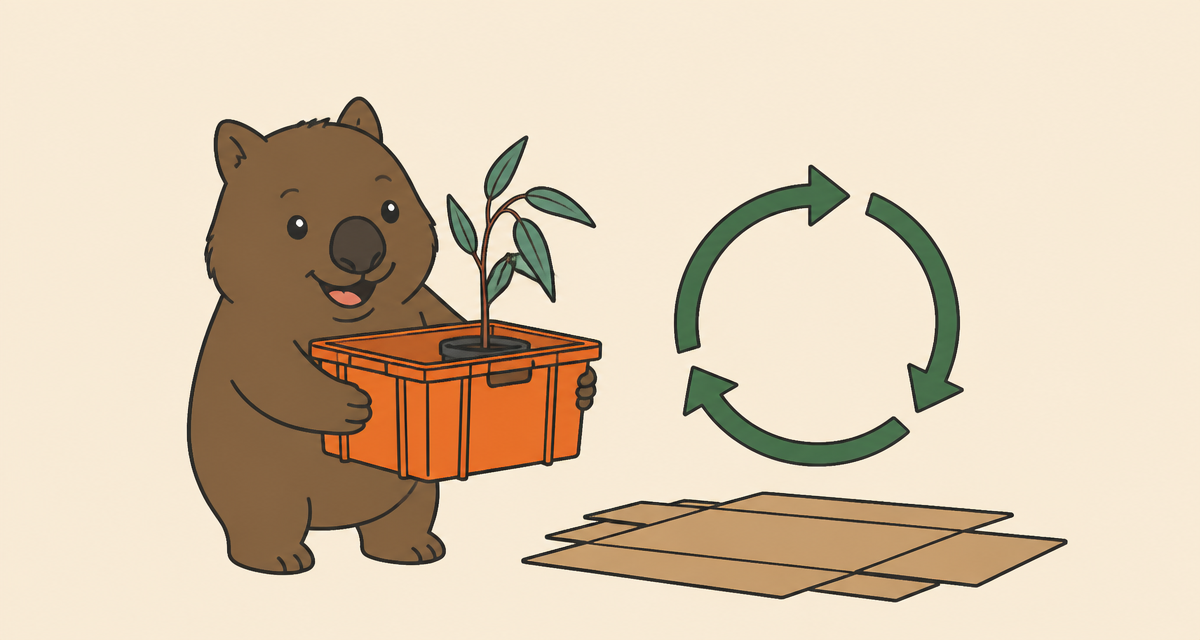
It feels wrong. Cardboard is paper, plastic is plastic, so cardboard must be the greener choice. For a single use item that is true. For moving house it is not, and the reason is arithmetic rather than marketing.
Count the uses, not the material
A moving carton is designed for one move. Handled well it might do two, and then the base is soft and it goes into recycling. A hire crate is injection moulded polypropylene built to be dropped, stacked and washed, and it goes back out over 200 times before it is retired. Spread the material and manufacturing across those moves and the impact per move is a fraction of a carton.
What happens at the end
Cardboard recycling is genuinely good, but it is not free. It needs collection, sorting, water and energy, and every cycle shortens the fibre. Tape and labels contaminate it, and a wet carton often cannot be recycled at all. When one of our crates finally cracks it is shredded and moulded into new crates, because a single material with no tape and no labels is easy to reprocess.
The trips nobody counts
The hidden cost of cardboard is your car. Trips to buy boxes, trips to collect free ones from behind shops, then the run to the recycling centre when your yellow bin cannot cope with a house worth of flattened cartons. Our crates arrive on a delivery run that is already passing your suburb, and leave on the same kind of run.
The honest limits
Crates are not the lower impact choice for everything. Long term storage in a garage, framed art and oddly shaped items are better in cardboard or purpose built cartons, and reusing boxes a friend has just moved with beats buying anything new. For the bulk of a house, though, a crate that has already done two hundred moves and will do two hundred more is hard to beat.
What we do about it
We wash and inspect every crate between hires, repair rather than replace where we can, run one delivery route per area per day, and take the crates back so no packaging ends up in your bin at all.